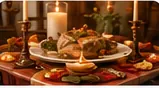
At a glance
Create a warm, functional Thanksgiving table without crowding the meal. Use the guide as a framework, then adjust it for your kitchen, guests, traditions and local food-safety advice.
Start with function
Measure the table, count serving dishes and keep sightlines open. A beautiful centrepiece fails if guests cannot see or pass food.
- Use a sideboard for large platters
- keep candles stable
- leave elbow room.
Choose a restrained palette
Cream, rust, brown, gold and muted green work well together. Two or three main colours usually look more intentional than every autumn colour at once.
- Repeat colours in napkins and place cards
- use plain dishes to calm a busy table.
Use natural materials safely
Leaves, wheat, apples, pears and small gourds add texture. Clean items and keep dry materials away from flames.
- Use LED candles around children
- avoid strongly scented flowers near food.
Personalize place settings
A name card or short gratitude note makes guests feel expected. Use readable type and avoid elaborate crafts that create host stress.
- Prepare early
- include dietary labels where useful.
Plan serving flow
Decide whether food will be on the table, a buffet or plated in the kitchen. Decor should support that plan.
- Place trivets before hot dishes arrive
- keep gravy within reach
- provide spare napkins.
A practical final check
Write down the decisions that matter: guest count, meal time, dietary needs, oven space, serving dishes and who is responsible for each task. A short written plan is more useful than trying to remember dozens of details on Thanksgiving Day.